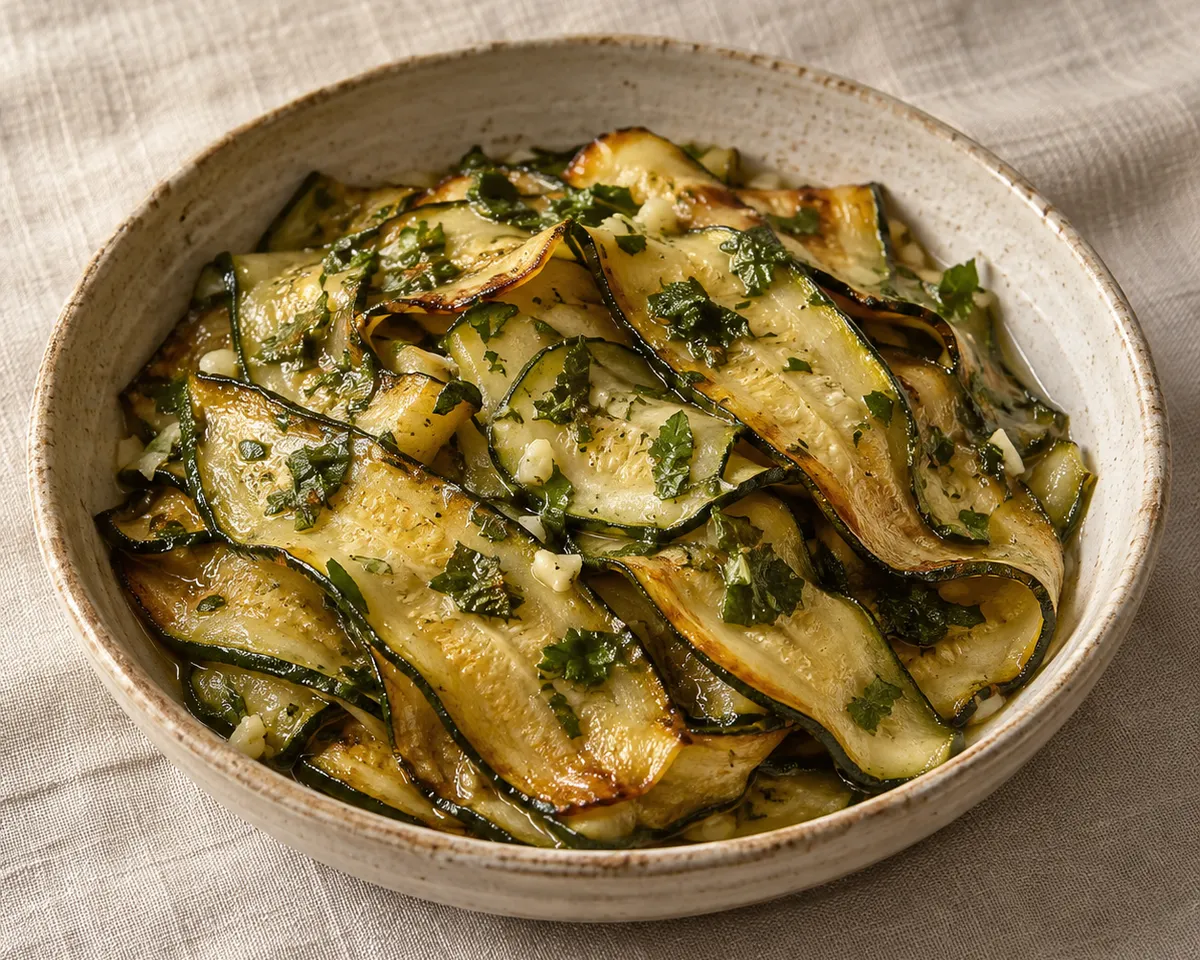
Zucchine alla concia
Roman Jewish marinated fried zucchini
Zucchine alla concia develops its flavor during a long rest. Thin slices of zucchini go into hot oil until they are golden at the edges, then into a dish with garlic, herbs, olive oil, and wine vinegar. By the next day, the sharpness has settled into the zucchini and the fried slices have become silky without losing all their shape.
This is a staple of cucina giudaico-romanesca, the food of Rome's long-established Jewish community. The preferred squash is the local zucchina romanesca: pale, ribbed, and faintly bitter. Fresh mentuccia leaves bring a gentler, greener perfume than the blast of ordinary mint.
The family resemblance to Naples's zucchine alla scapece is real: both begin with fried zucchini and vinegar. Concia has its own Roman Jewish vocabulary, though, built in layers with garlic and herbs and allowed the time to become a cold antipasto.
Ingredients
For the concia
- 800 gsmall, firm zucchini, preferably pale-green, ridged zucchine romanesche (see note)
- about 1 L(4 cups)peanut oil, or enough for 2 cm (¾ in) depth in a wide skillet
- 3garlic cloves, thinly sliced
- 15 gfresh mentuccia romana leaves, roughly chopped (see note)
- 10 gflat-leaf parsley leaves, roughly chopped
- 45 ml(3 tbsp)white wine vinegar
- 30 ml(2 tbsp)extra-virgin olive oil
- 1 tspfine salt, plus more as needed
Kitchen notes
- Zucchine romanesche
- The traditional Roman type is pale green, slender and lightly ribbed, rather than the uniformly dark-green zucchini common in U.S. supermarkets. Buy the freshest small, firm zucchini you can find; the local Roman variety is preferred for its flavor and texture, but the preparation remains workable with ordinary zucchini.
- Mentuccia romana
- Some Roman Jewish family versions use basil or parsley; this recipe uses fresh mentuccia. Common names vary, so ask a specialist Italian grower or market to identify the fresh herb used in Roman cooking. Peppermint or mint extract would overpower the marinade.
- White wine vinegar
- Use plain white wine vinegar, not sweet balsamic vinegar or a strongly flavored specialty vinegar. It should give the zucchini a clean, restrained acidity after the rest.
- Frying oil and olive oil
- The peanut oil is for frying; the extra-virgin olive oil is added raw with the vinegar. That split keeps the marinade fragrant while using a practical frying medium for a small home batch.
Method
Slice and fry
- Trim the zucchini and cut them lengthwise into slices 4–5 mm (about 3/16 in) thick. Spread them on a clean towel and dry them very well. Heat the peanut oil in a wide, heavy skillet to 350°F (175°C). Fry the zucchini in small batches, turning once or twice, until tender and golden at the edges but not hard or dark brown, about 2–3 minutes per batch. Transfer to a rack or paper towels and season lightly with salt while warm. Let the oil return to temperature between batches.
Layer the marinade
- In a shallow glass or ceramic dish, make a layer of warm fried zucchini. Scatter over a third of the garlic, mentuccia, and parsley; drizzle with a third of the vinegar and olive oil. Repeat twice more, arranging the slices loosely enough that the seasonings can reach them. Taste a cooled edge and add a little more salt only if it needs it.
Rest and serve
- Let the dish cool, cover, and refrigerate overnight, or at least 5 hours. Bring it out about 30 minutes before serving, then turn the layers gently with a spoon so the settled oil and vinegar coat the zucchini. Serve cool or at room temperature, with bread if you like.