Suppa cuata
Gallurese baked bread, broth, and cheese
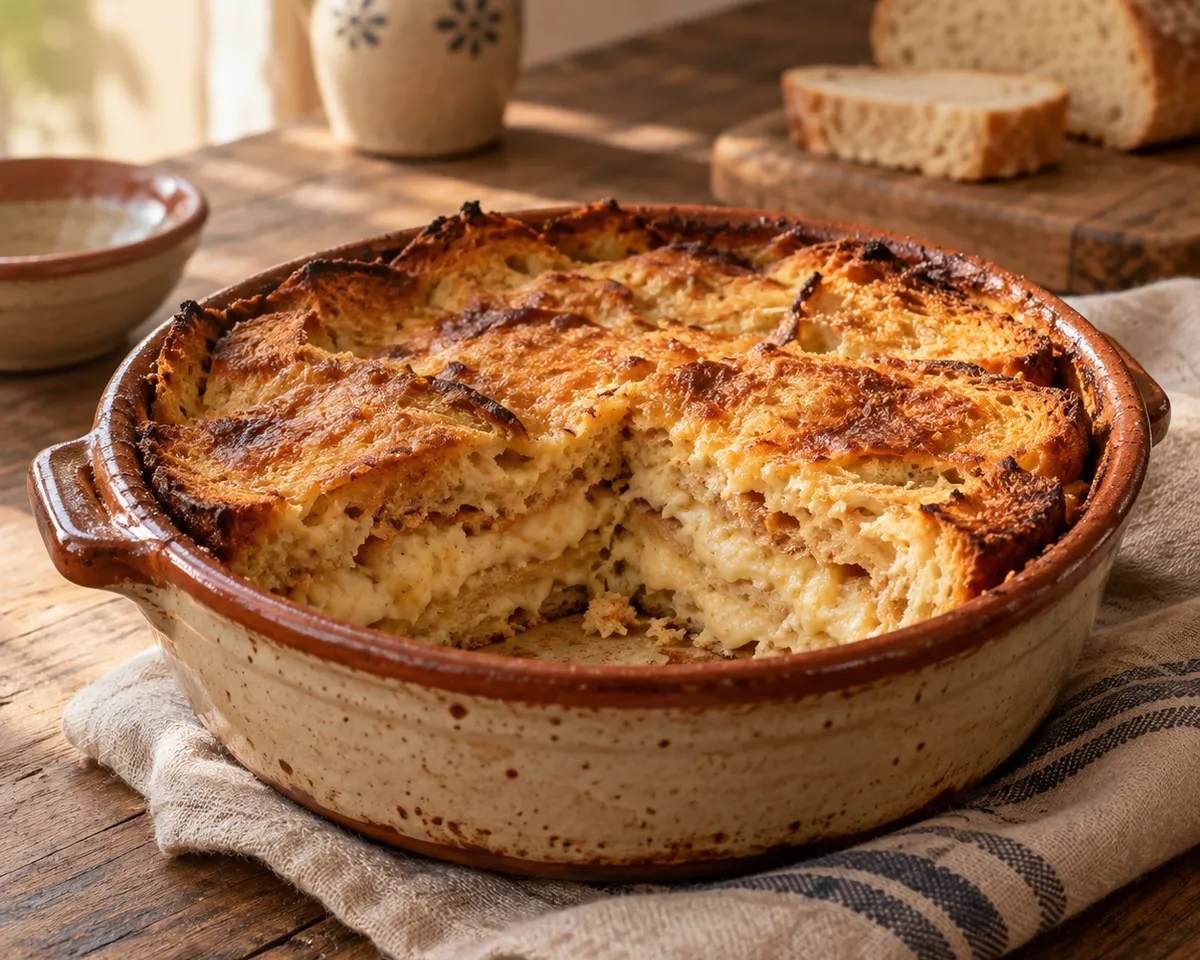
Gallura's suppa cuata has a crisp crust of cheese and bread over soft, broth-soaked layers. Its name is usually rendered as hidden soup: the liquid disappears into the bread, leaving a bake that holds together when cut.
Dried spianata holds the layers together. It is soaked with a powerful broth of sheep and beef, then layered with two different cheeses: pliant casizolu and firm, salty pecorino. One melts into strands; the other seasons the whole pan.
Carasau appears in some modern versions, but it is a different bread with a different absorption pattern. Around Tempio Pausania and Berchidda, thick slices of stale bread absorb the broth and stay substantial enough to cut. The hot broth must find every layer before the oven makes the top audibly crisp.
Ingredients
For the broth
- 700 gbeef chuck or brisket, cut into large pieces
- 350 gmutton neck or shoulder, cut into large pieces (see note)
- 1yellow onion, halved
- 1carrot, halved
- 1celery stalk, halved
- 2.5 L(10½ cups)cold water
- 10 g(about 1¾ tsp)fine sea salt, plus more as needed
For the suppa cuata
- 450 g2–3-day-old durum-wheat spianata, sliced no thicker than 1 cm (⅜ inch; see note)
- 300 gcasizolu, thinly sliced or coarsely grated (see note)
- 220 gsemi-aged Pecorino Sardo, finely grated
- 1 g(about ½ tsp)freshly ground black pepper
Kitchen notes
- Mutton
- The Gallurese broth is traditionally based on sheep, often joined by beef. Mutton is adult sheep and gives the broth its full flavor; seek it through a specialist butcher rather than changing the broth's defining meat.
- Spianata
- Use a thick, sturdy, 2–3-day-old Sardinian durum bread, often sold as pane spianata or pane di grano duro. It should be sliced, not wafer-thin. Pane carasau appears in some variants, but its brittle sheets absorb broth differently from the thick bread used here.
- Casizolu
- Casizolu is a mild Sardinian cow's-milk stretched-curd cheese. Its gentle melt is one half of the dish's cheese structure. Seek it through a specialty Italian supplier; mozzarella is not a stand-in because it releases too much water and lacks its character.
- Pecorino Sardo
- Choose a semi-aged sheep's-milk Pecorino Sardo, not generic shelf-stable grated Parmesan or Pecorino Romano. It brings salinity and a firmer aged-cheese note alongside the soft casizolu.
Method
Make a clear, concentrated broth
- Put the beef, mutton, onion, carrot, celery, water, and salt in a stockpot. Bring just to a simmer, skim any foam, then cook at the gentlest possible bubble until the meats are tender and the broth tastes full but clean, about 2½–3 hours. Partially cover the pot and add boiling water as needed to keep at least 1.8 L (about 7½ cups) in the pot, so the strained broth will comfortably yield the 1.3 L (about 5½ cups) needed for the bake. Strain the broth and reserve the meat for another meal. Keep the broth very hot and taste it now: it should be well seasoned, since it is the dish's only source of moisture.
Layer bread and cheese
- Heat the oven to 475°F (240°C). Use a 23 x 33 cm (9 x 13-inch) baking dish and cover its base snugly with one layer of the sliced stale spianata. Scatter over 150 g of the casizolu and 75 g of the pecorino. Add a second bread layer and repeat with the same cheese amounts. Finish with the third and final bread layer, then scatter the remaining 70 g pecorino over the top. The layers should lie fairly flat, with no large gaps that would leave dry bread exposed.
Soak the hidden layers
- Ladle the hot broth slowly and evenly over the whole dish, pausing so it can disappear between the slices. Use up to 1.3 L (5½ cups), stopping only when the lower layers are thoroughly saturated but the top is not floating. Pierce straight down in several places with the tines of a fork to help the broth reach the base. Rest 10 minutes; the bread should be tender all the way through while the top still has visible structure.
Bake a crisp crust
- Grind the black pepper over the top and bake until the dish puffs and the surface develops a dark-golden, crackling crust, about 35–40 minutes. If it colors too quickly before the center is hot, lay foil loosely over the top for the final minutes. Rest 20 minutes before cutting. A successful suppa cuata is sliceable and juicy within, with no pool of broth at the bottom and no hard, unsoaked bread in the middle.